

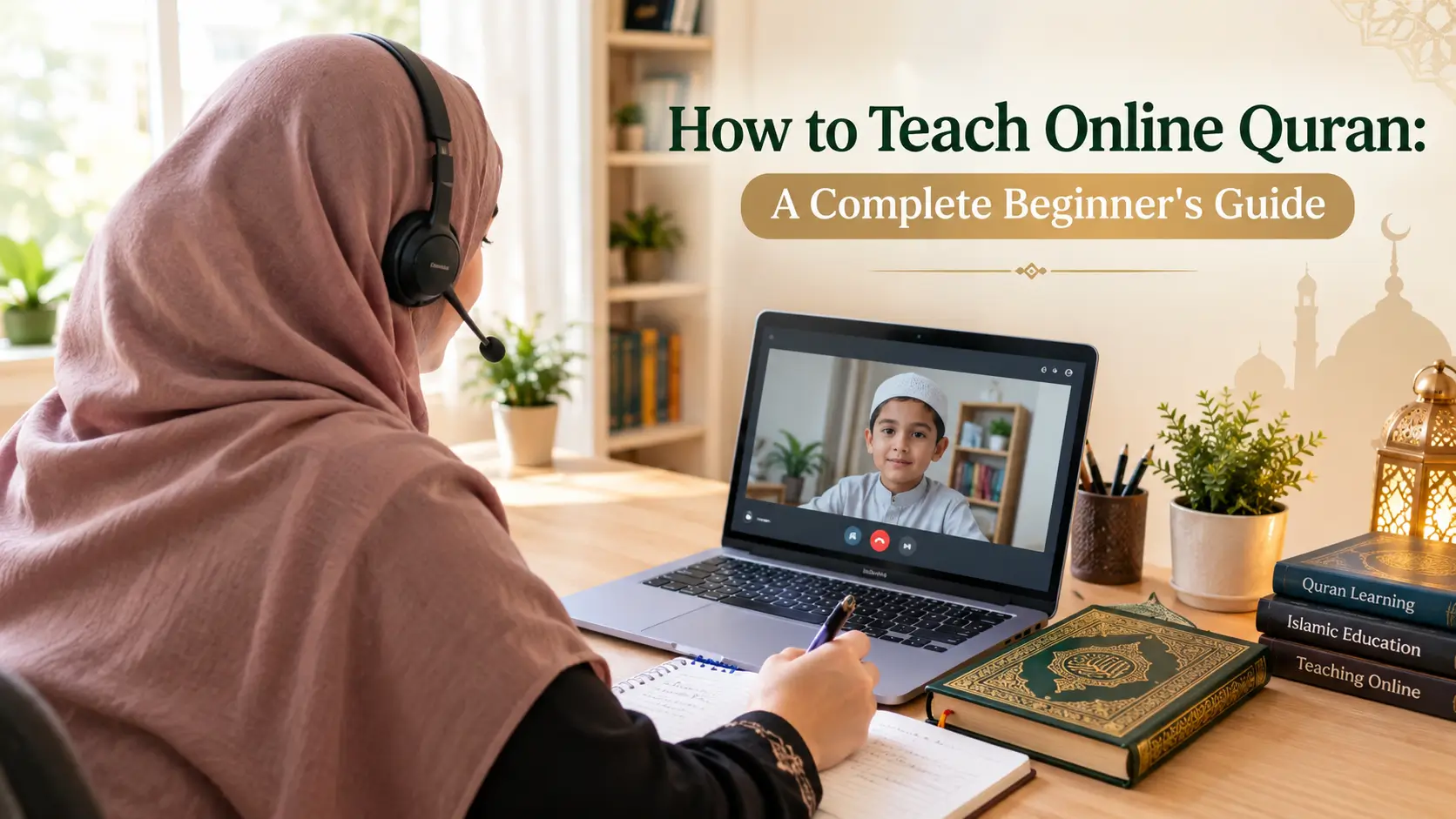
Introduction:
Many people who know the Quran well still don’t know where to start when it comes to teaching it online. They have the knowledge but not the roadmap — which tools to use, how to price lessons, or how to find students.
This matters because online Quran teaching has grown into a real career path. Families across the US, UK, and Canada are actively searching for qualified tutors who can teach Tajweed, Hifz, and Arabic reading from home.
In this guide, you’ll learn exactly how to teach online Quran — from getting qualified, to choosing the right tools, to finding your first students and growing a steady income.
Teaching online Quran means delivering Quran lessons — reading, Tajweed, memorization, or Tafsir — through video call platforms like Zoom or Skype, using digital tools such as shared Mushafs, whiteboards, and recordings instead of an in-person classroom.
summary
To teach online Quran successfully: get proper qualifications (Ijazah or a recognized Tajweed course), choose your teaching niche, set up reliable video and audio equipment, pick a platform or build your own website, create a simple curriculum, and market yourself through social media and referrals. Consistency and clear communication matter more than fancy tools.
Why Teach Quran Online?
Before the steps, it helps to understand why this path works so well right now.
Online Quran teaching removes location limits. A teacher in Karachi can teach a student in Chicago. A hafiza in Cairo can tutor a family in Toronto. This global reach is the biggest advantage over traditional classroom teaching.
It also offers flexible income. Many teachers start part-time, teaching a few hours in the evening, and later scale into a full schedule once they build a student base.
Real example: A teacher in Texas started with two students found through a Facebook group for Muslim parents. Within eight months, word-of-mouth referrals grew her class to 14 regular students, all taught through Zoom.
Step-by-Step: How to Teach Online Quran
1. Build Your Qualifications First
Before teaching, make sure your own knowledge is solid. This doesn’t mean you need a formal degree, but you should have:
- Strong Tajweed rules and correct pronunciation (Makharij)
- Ijazah in recitation, if possible — this adds real credibility
- Basic Arabic reading fluency if you plan to teach Tafsir or grammar
- Clear understanding of your teaching niche (kids, adults, memorization, or Tajweed correction)
If you don’t have an Ijazah yet, several recognized online academies offer certification programs. Parents often ask about this directly, so having proof of qualification builds trust fast.
2. Choose Your Teaching Niche
Trying to teach everything to everyone usually backfires. Instead, pick a focus:
- Noorani Qaida & Quran reading for beginners and young children
- Tajweed correction for students who can already read but want accuracy
- Hifz (memorization) support for students working toward memorizing the Quran
- Tafsir or Arabic language for older students wanting deeper understanding
A clear niche makes your marketing simpler and helps you attract the right students faster.
3. Set Up the Right Tools
You don’t need expensive equipment, but a few basics make a big difference:
- A stable internet connection (this matters more than anything else)
- A decent webcam and microphone — even a smartphone works well
- Video calling software: Zoom, Skype, or Google Meet
- A digital Mushaf app or PDF you can share on screen
- A simple whiteboard tool for writing Arabic letters or notes
Many teachers underestimate audio quality. Students can tolerate a slightly blurry video, but they’ll struggle badly if they can’t hear Tajweed sounds clearly.
4. Choose Where to Teach
You have two main routes:
- Join an existing Quran academy as a tutor. This gets you students faster but usually means lower pay per hour since the platform takes a share.
- Build your own independent teaching business. This takes more effort upfront (marketing, scheduling, payments) but you keep full control and earn more per lesson.
Many successful teachers start with an academy to build experience, then transition to independent teaching once they have consistent students and confidence.
5. Create a Simple Curriculum
Students and parents want structure, not random lessons. Even a basic plan helps:
- Week 1–4: Assess current level, correct major Tajweed mistakes
- Month 2–3: Build fluency in reading with proper rules
- Ongoing: Weekly memorization targets or Tafsir topics
Keep a simple progress sheet for each student. Parents love seeing measurable progress — it’s one of the biggest reasons they continue lessons month after month.
6. Set Fair, Clear Pricing
Pricing depends on your experience, location, and niche. In the US, many independent online Quran tutors charge between $10 and $25 per hour, depending on qualifications and demand. New teachers often start lower to build reviews, then raise rates once they have a steady client base.
Be upfront about pricing, cancellation policy, and package options (monthly plans usually work better than pay-per-lesson for retention).
7. Market Yourself the Right Way
Marketing doesn’t need to be complicated:
- Post short teaching tips or Tajweed clips on Facebook and Instagram
- Join local Muslim community groups online
- Ask satisfied students for referrals — this is often the strongest source of new students
- Create a simple one-page website or profile explaining your background and teaching style
Consistency beats intensity here. Posting regularly, even simple content, builds trust over time.
8. Manage Scheduling and Payments Smoothly
Use a simple booking tool or shared calendar so students know exactly when classes happen. For payments, tools like PayPal or Stripe work well for US-based teachers, keeping everything organized and professional.
Comparing Common Tools for Teaching Quran Online
| Tool | Best For | Limitation |
|---|---|---|
| Zoom | Group and one-on-one classes, screen sharing | Free plan limits group calls to 40 minutes |
| Skype | Simple one-on-one lessons | Fewer teaching features (no breakout rooms) |
| Google Meet | Quick, browser-based sessions | Weaker screen annotation tools |
| Dedicated Quran academy platforms | Built-in scheduling, payments, student tracking | Platform takes a percentage of earnings |
Common Mistakes New Online Quran Teachers Make
- Skipping a real qualification check before starting, which hurts credibility later
- Overloading the first lesson with rules instead of building comfort first
- Ignoring audio quality, which makes Tajweed correction nearly impossible
- Not setting clear expectations about schedule changes or missed classes
- Trying to teach too many students at once before systems are in place
Honest Pros and Cons
Pros: Flexible hours, global student reach, low startup cost, meaningful work.
Cons: Income can be inconsistent at first, requires strong self-discipline, and building trust online takes longer than in-person teaching.
Frequently Asked Questions
Do I need an Ijazah to teach Quran online?
Not always, but it strongly helps. An Ijazah proves your recitation has been verified by a qualified teacher, which builds trust with parents and students right away.
Many independent tutors without a formal Ijazah still teach successfully, especially for basic reading and Noorani Qaida, but competitive niches like Tajweed correction usually expect certification.
What equipment do I really need to start?
A smartphone or laptop with a working camera and microphone, plus stable internet, is enough to start. Fancy setups aren’t necessary in the beginning.
As you grow, investing in a better microphone can noticeably improve how clearly students hear Tajweed sounds, which matters more than video quality.
How much can I earn teaching Quran online?
In the US, independent tutors typically earn $10–$25 per hour depending on experience and niche, while academy-based teachers may earn a bit less per hour but get more consistent student flow.
Earnings grow steadily as your reputation and referrals build, especially if you specialize in a high-demand niche like Hifz support.
Which platform is best for teaching Quran online?
Zoom is the most popular choice because of its screen-sharing and group features, though Skype works fine for simple one-on-one sessions.
The “best” platform really depends on your class size and whether you need built-in scheduling or payment tools, which dedicated Quran academy platforms often provide.
How do I find my first students?
Start with your own community — local mosque groups, Muslim parent Facebook groups, and word-of-mouth referrals from family and friends.
Once you have a few students, ask for honest reviews or testimonials, since these make a big difference when new parents are deciding whether to trust an online teacher.
Final Thoughts
Teaching online Quran isn’t complicated once you break it into steps: get qualified, choose your niche, set up reliable tools, price fairly, and market consistently. The teachers who succeed long-term are the ones who stay patient, keep learning, and genuinely care about their students’ progress.
Read this:
How Many Words Are in the Quran? Full Breakdown